THE STANDARD
One code for everyone
International Morse code is confirmed by the ITU in Recommendation ITU-R M.1677-1, approved in 2009. It notes the code has been in use since 1844.
How it began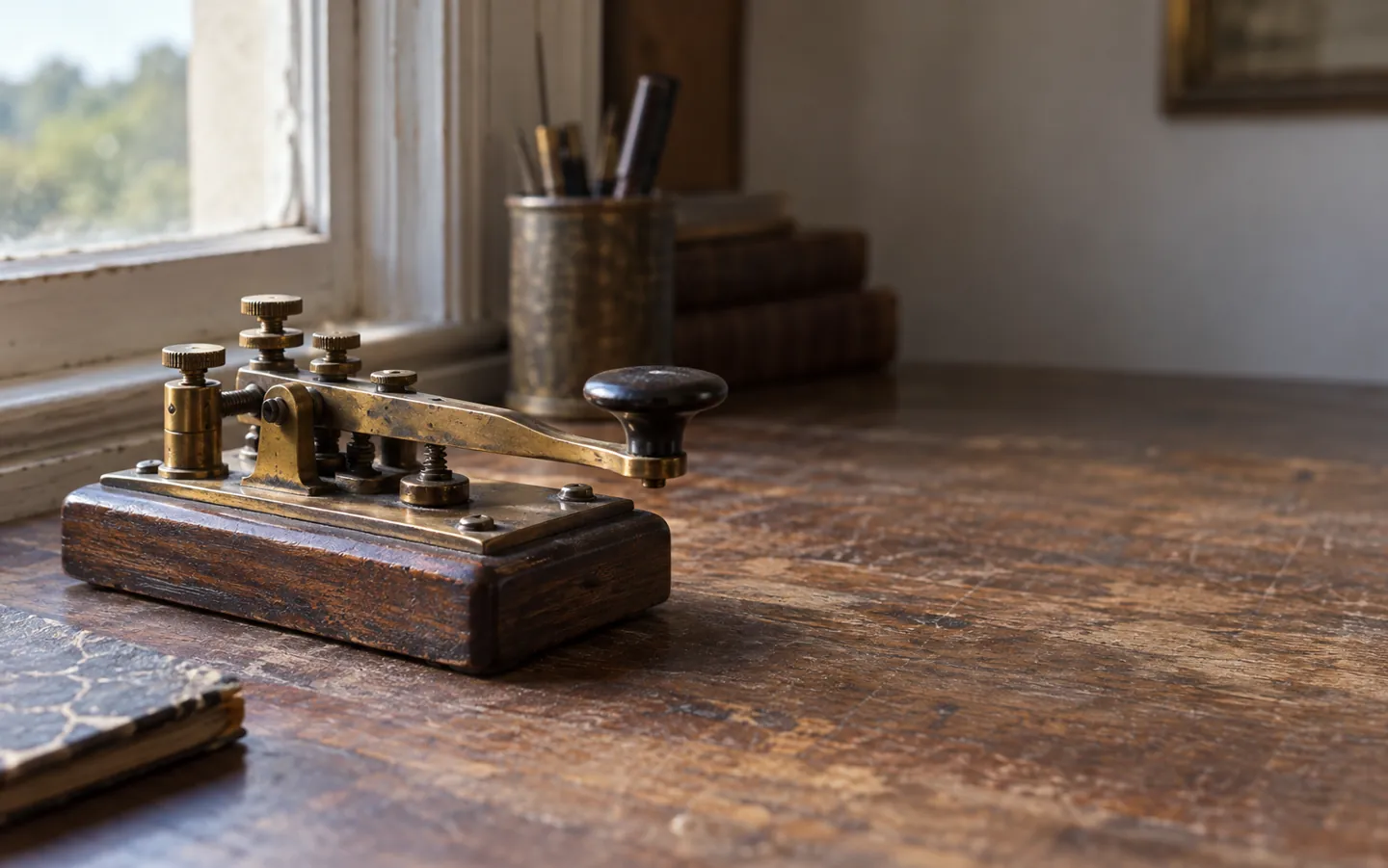
THE CODE BEHIND THE CLICKS
1 · 3 · 7 the Morse rhythm
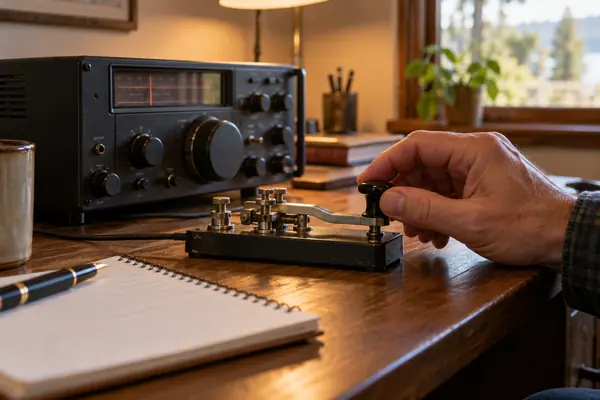
AI-generated image, not a photograph of a real person or place.
Every Morse letter is built from one unit of time.
The ITU's international standard sets the rules: a dash is three dots long, letters are three dots apart and words seven. Get the rhythm right and the code reads itself.
THE SHORT ANSWER
Letters, numbers and punctuation
are all made of the same two signals and three gaps.
THE STANDARD
International Morse code is confirmed by the ITU in Recommendation ITU-R M.1677-1, approved in 2009. It notes the code has been in use since 1844.
How it beganTHE RHYTHM
Signals inside a letter are one dot apart, letters three dots apart and words seven dots apart. The gaps carry as much meaning as the signals.
Check the timingAT SEA
The first International Radiotelegraph Conference in 1906 established SOS in Morse code as the international maritime distress signal, the ITU says.
See the dates
FOUR THINGS THAT HELP IT CLICK
Morse code makes more sense once you know why it is built the way it is. These facts come from the ITU standard and the University of Cambridge's NRICH project.
NRICH explains that the most frequent letter, e, was given the shortest code, a single dot, which is why Morse is not in alphabetical order.
The distress signal is three dots, three dashes and three dots.
The word PARIS with its trailing space equals 50 units, the standard word length. NRICH says experienced operators work at 20 to 30 words per minute.
The ITU lists procedure signals too: eight dots means error, and a starting signal precedes every transmission.
TWO DATES WORTH KNOWING
One date for the first message,
one for the distress call that went global.
1844
Washington to Baltimore by telegraph
The Library of Congress records that the first message was sent on 24 May 1844 from the US Capitol in Washington to Baltimore. The ITU standard also dates Morse code's use from 1844.
FIRST MESSAGE · LIBRARY OF CONGRESS
1906
SOS adopted for ships at sea
The ITU says the first International Radiotelegraph Conference in 1906 established SOS in Morse code as the international maritime distress signal. In 1912, after the Titanic sank, a conference agreed a common frequency for ships' distress signals.
DISTRESS SIGNAL · ITU
NRICH, part of the University of Cambridge's Millennium Mathematics Project, notes that a Berlin conference in 1851 set the international standard that differed from the original American code.
THE TIMING RULES
Pick a part of a Morse message to see how long it lasts, measured in dots. The bar shows how long it is compared with the longest gap.
Lengths from Recommendation ITU-R M.1677-1, International Morse code, Annex 1, Part I.
HOW IT BEGAN
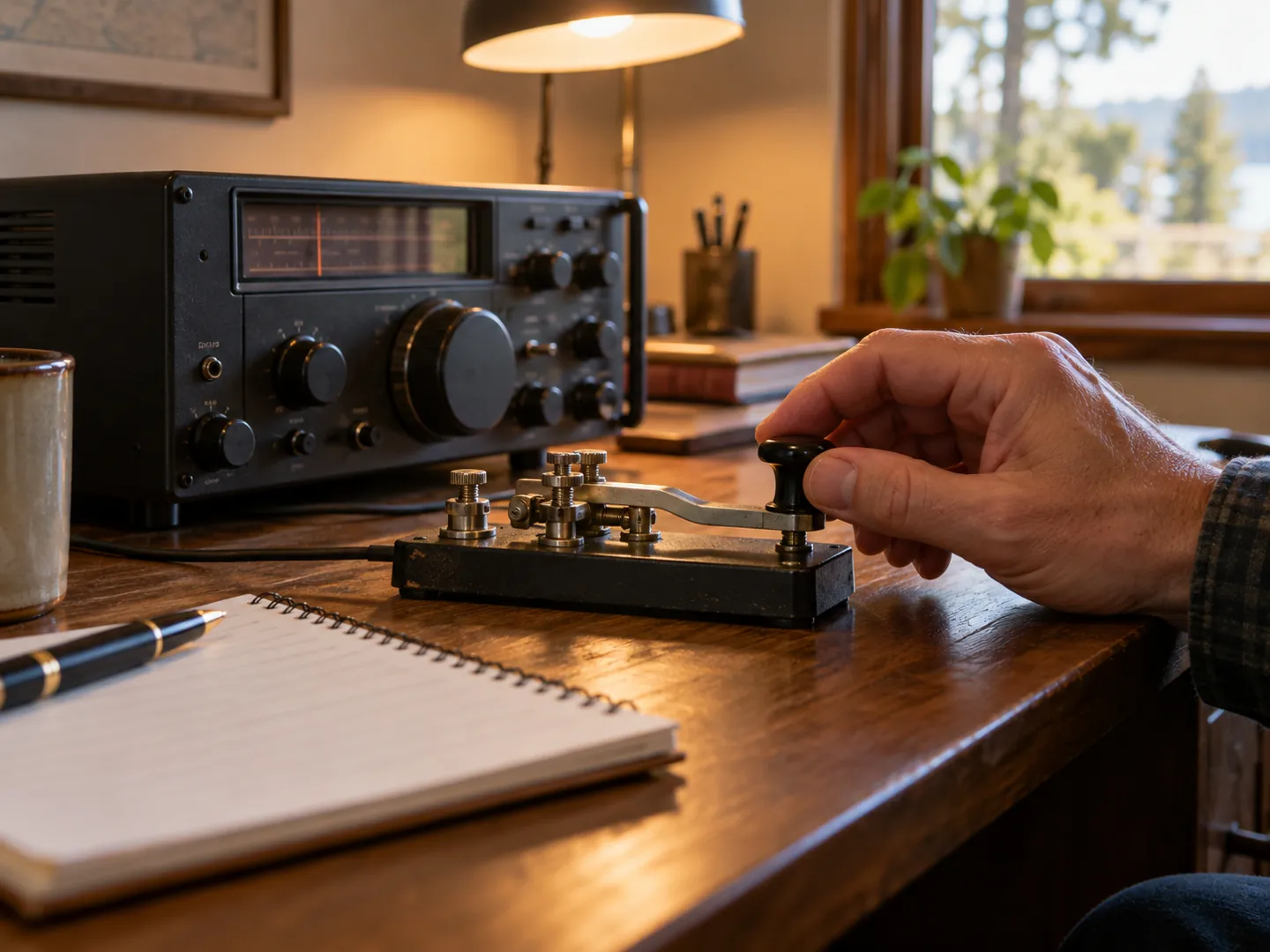
The early telegraph sent an electric current along a wire to an electromagnet at the far end, which pulled a metal key down with a click. How long the sender held the key decided whether a dot or a dash arrived, the US National High Magnetic Field Laboratory explains.
The Library of Congress says the first system printed raised dots and dashes on paper tape, but clerks learned to read messages by sound. The ITU notes the code is still used in amateur and amateur-satellite radio, and to a diminishing extent in the mobile and fixed services.
In conversation
Recommendation ITU-R M.1677-1 says a dash is equal to three dots. The gap between letters is also three dots, and the gap between words is seven.
NRICH explains that the code's designer counted printer's type and found more e's than any other letter, so e was given the shortest code.
The ITU says the first International Radiotelegraph Conference, in 1906, established SOS in Morse code as the international maritime distress signal.
Yes. The ITU standard says it continues to be used in the amateur and amateur-satellite services, and to a diminishing extent in the mobile and fixed services.
Yes. The ITU standard includes the commercial at, written as dot dash dash dot dash dot.
Each figure on this page comes from the sources below.
ABOUT THIS NAME
doodlecodes.com is part of the DoodleSale portfolio. It isn't in an auction right now, but you can ask about leasing it.